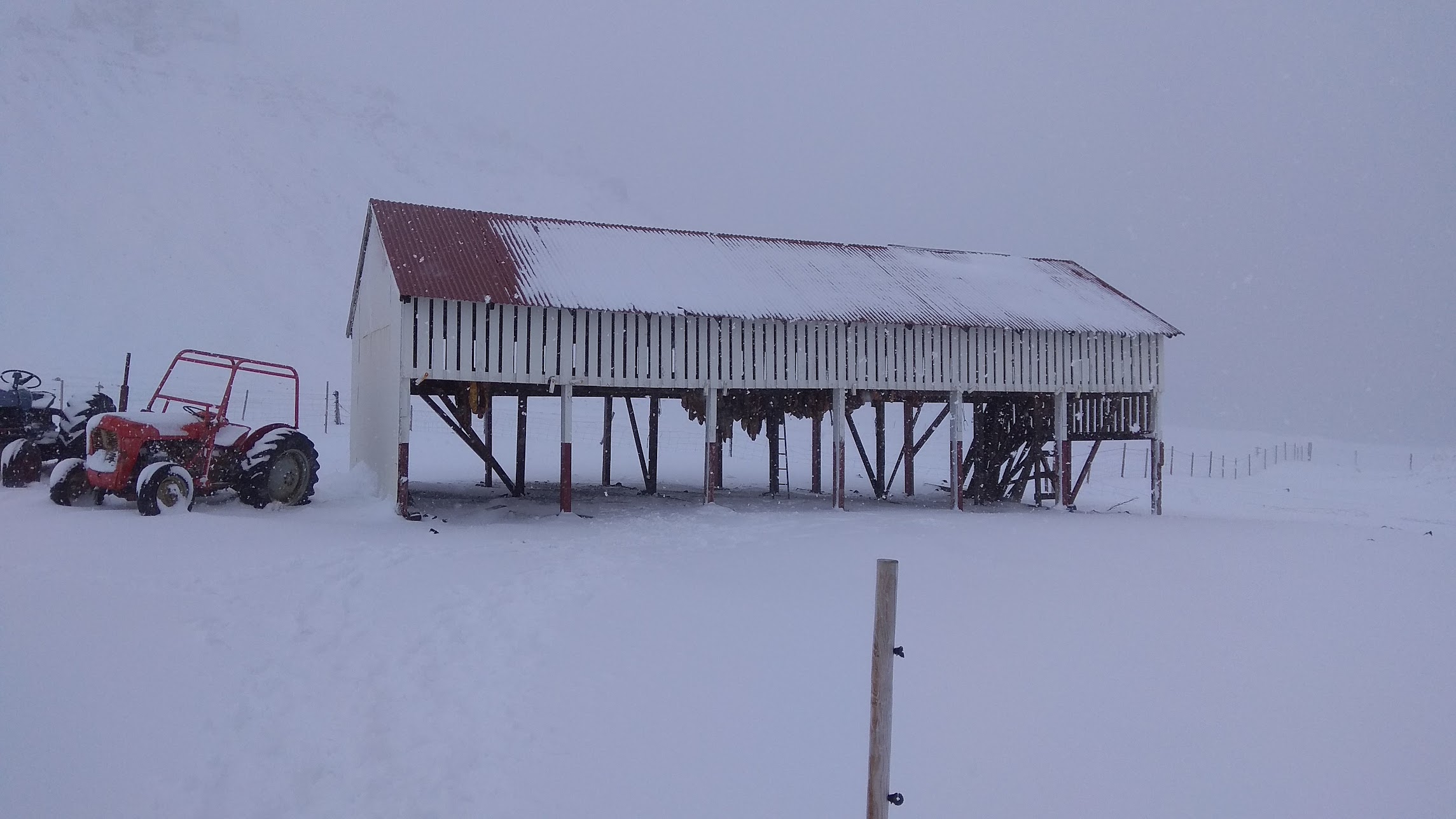
A few years ago, when I was in Iceland for the first time, we decided that leaving without tasting hákarl would be an unforgivable sin. So we headed straight to the source – the Bjarnarhöfn Shark Museum.
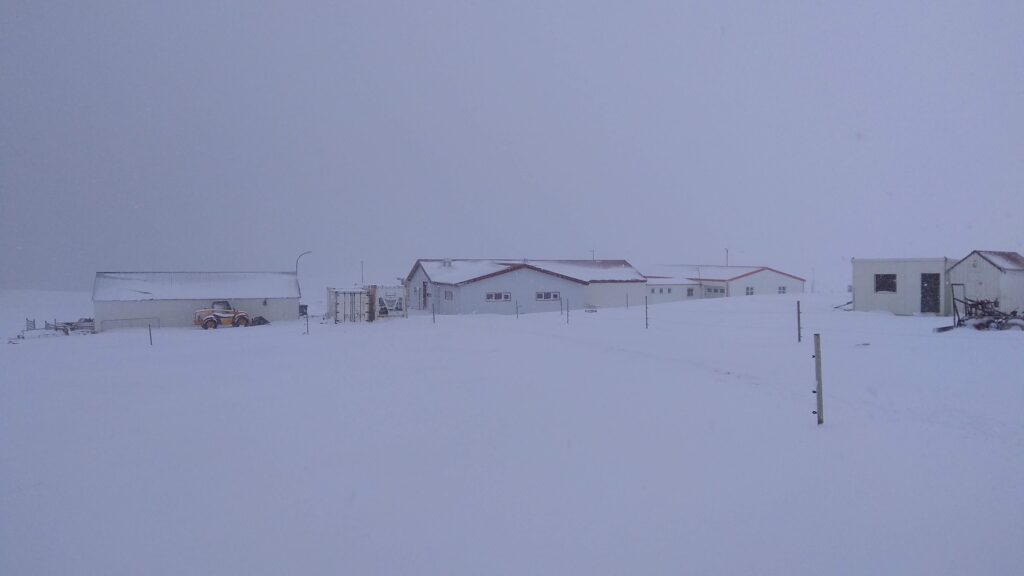
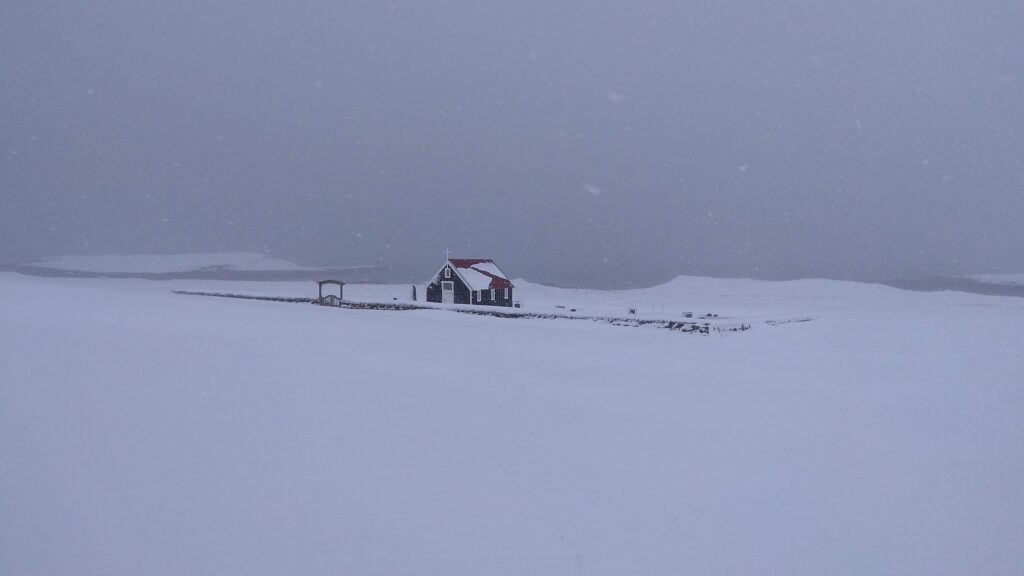
The trip there quickly turned into a real polar expedition. It started snowing heavily, the road disappeared in a moment, and we were crawling through the blizzard. We only followed the GPS and a few road markers sticking out of the snowdrifts. The good thing about this crazy weather became obvious right after we arrived. We were completely alone in the museum.
And then it happened. The tasting itself. What can I say. Imagine fishing out those urinal cakes and trying to eat them. The meat has a weird soapy texture and it smells heavily of urine.
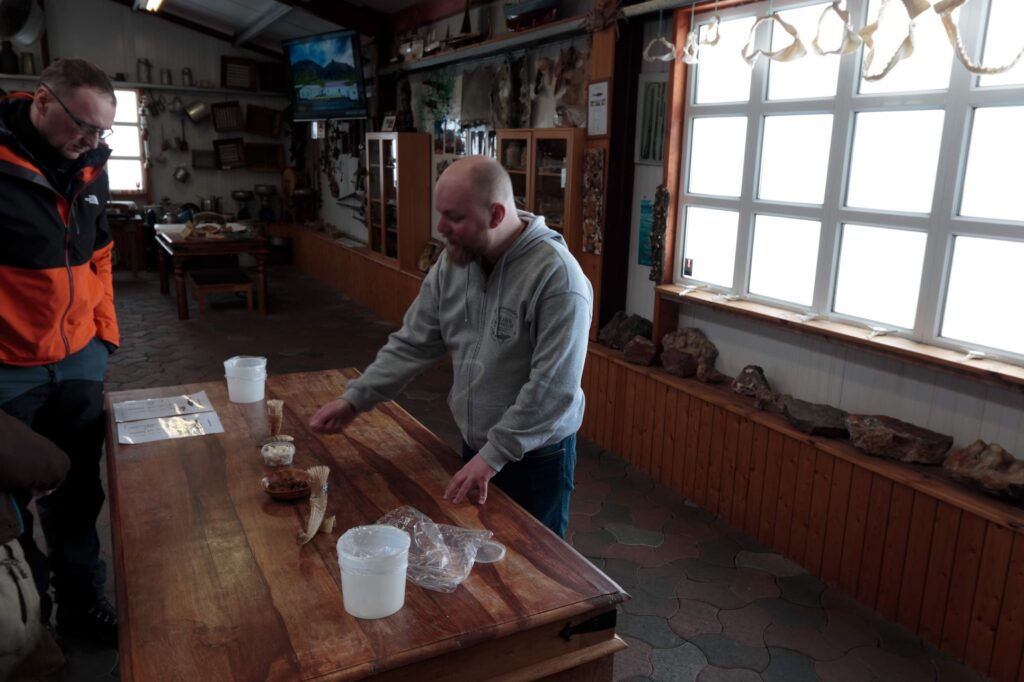
But guess what? In the end, it wasn’t that bad. Together with the local sweet bread, it actually worked quite well. We even happily asked for seconds, which our Icelandic guide really appreciated. So, while I safely put hákarl in my personal top 10 worst foods I’ve ever eaten, it definitely doesn’t reach the top spots.
What are you actually eating?
If you wonder why anyone would voluntarily eat something that smells like ammonia, the answer lies in the harsh history of the island. Hákarl is made from the Greenland shark. This giant predator, which normally lives for hundreds of years, has one major anatomical feature – its fresh meat is highly toxic to humans. To survive in the freezing Arctic waters, the shark has blood and tissues full of urea and trimethylamine oxide (TMAO), which act as a natural antifreeze.
Icelanders in the past didn’t have the luxury of choosing what to eat. They had to find a way to use this huge source of protein from caught sharks without dying. So, they came up with a harsh fermentation process.
Traditionally, the shark meat is cut into huge pieces and buried in sand and gravel. Heavy stones are placed on top. Over a few weeks, the pressure of the stones literally squeezes the toxic fluids and urea out of the meat. Today, the meat is often put into large perforated plastic containers, but the principle of pressing and rotting stays the same.
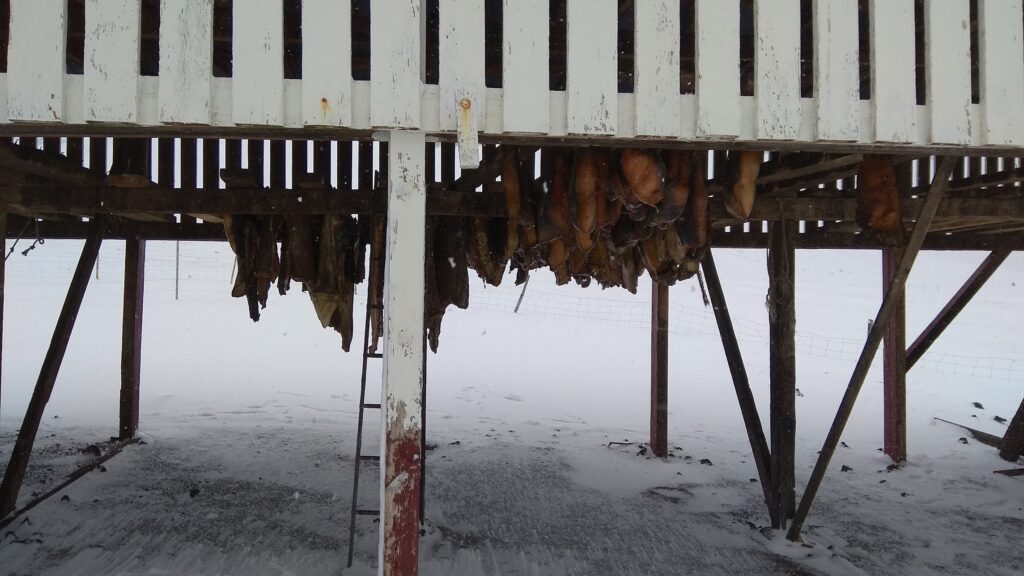
Then the meat is taken out, cut into strips, and hung in drying sheds, where it dries and ages in the wind for several months. During this time, a hard brown crust forms on the surface. This crust is cut off before serving, leaving only the clean, white hákarl.
It was simply a matter of pure survival. Fermented shark lasted for many months and provided necessary energy during cruel Nordic winters. Today, it is primarily a cultural heritage and a test of courage, but if you go to Iceland, give it a try. Maybe you will go for seconds too.